
DCC MEP Ltd Achieves ISO 9001 Accreditation
News
DCC MEP Ltd Achieves ISO 9001 Accreditation We are delighted to announce that DCC MEP...
Over the past ten years, the Mechanical, Electrical and Plumbing (MEP) sector in the UK has undergone profound transformation. What was once a largely traditional engineering and contracting discipline has quickly become a technology driven, sustainability-focused and highly collaborative component of modern construction. From digital innovation and regulatory overhaul to shifting workforce dynamics and carbon reduction imperatives, the industry today looks very different from how it did in 2016.
A Digital Revolution: BIM, Collaboration and Data
One of the most significant changes in the last decade has been the widespread adoption of Building Information Modelling (BIM). While the UK Government mandated BIM Level 2 for public projects around 2016, its influence has continued to grow, reshaping how MEP systems are designed, coordinated, and delivered. BIM has moved beyond a 3D visualisation tool to become the backbone of project integration, allowing mechanical, electrical and plumbing systems to be modelled alongside architectural and structural elements with greater precision and fewer conflicts. This enhanced clash detection and real time data sharing has significantly reduced costly site rework and improved project outcomes.
In recent years, digital tools have gone further still. Advanced BIM platforms now incorporate digital twins, real time virtual replicas of buildings used to optimise performance throughout the asset lifecycle and AI assisted design optimisation that automates routine tasks and predicts issues before they occur. These technologies have fundamentally changed expectations around delivery quality and timeliness.
Sustainability and Net Zero: From Optional to Essential
A decade ago, sustainability was often viewed as a “nice to have” in MEP design. Today, it is integral, driven by tightened UK regulations and market demand for net zero carbon buildings. Frameworks such as BREEAM sustainability standards have become common requirements in commercial and public projects, pushing MEP engineers to specify energy efficient HVAC systems, low-flow plumbing, renewable energy integration, and smarter building controls.

The UK’s commitment to Net Zero by 2050 has accelerated this shift. MEP teams are now routinely involved early in project planning to model energy use, optimise heating and cooling strategies and support decarbonisation goals. Retrofit projects, upgrading existing systems to improve performance have also become more prominent as building owners seek to reduce operational carbon without rebuilding entire structures.
Skills, Workforce and Changing Roles
Another major change has been in the workforce dynamics of the MEP industry. Over the last decade, the sector has faced persistent skills shortages, particularly in specialised digital and sustainability related roles. Demand for engineers proficient in BIM, energy modelling and digital tools such as Revit remains high, and firms are increasingly investing in apprenticeships and early career development to bridge the gap.
Hybrid working models and a broader geographic hiring footprint have also taken hold, especially in design functions where remote collaboration is now possible. This has opened up opportunities for talent outside traditional urban construction hubs and allowed companies to adapt to shifting worker expectations around flexibility.
Regulation, Compliance and Health-Driven Design
Regulatory evolution has been a recurring theme in the MEP landscape. Over the last decade, building standards and compliance frameworks have tightened significantly, with a sharper focus on health, safety, accessibility and environmental performance. New standards for ventilation, fire safety, energy performance and indoor air quality reflect a greater understanding of how building systems affect occupant wellbeing.
This shift has been further accelerated by global events such as the COVID-19 pandemic, which highlighted the importance of indoor air quality and ventilation in mitigating disease transmission. As a result, MEP design has expanded to prioritise healthier environments through improved airflow, intelligent controls and advanced filtration systems.
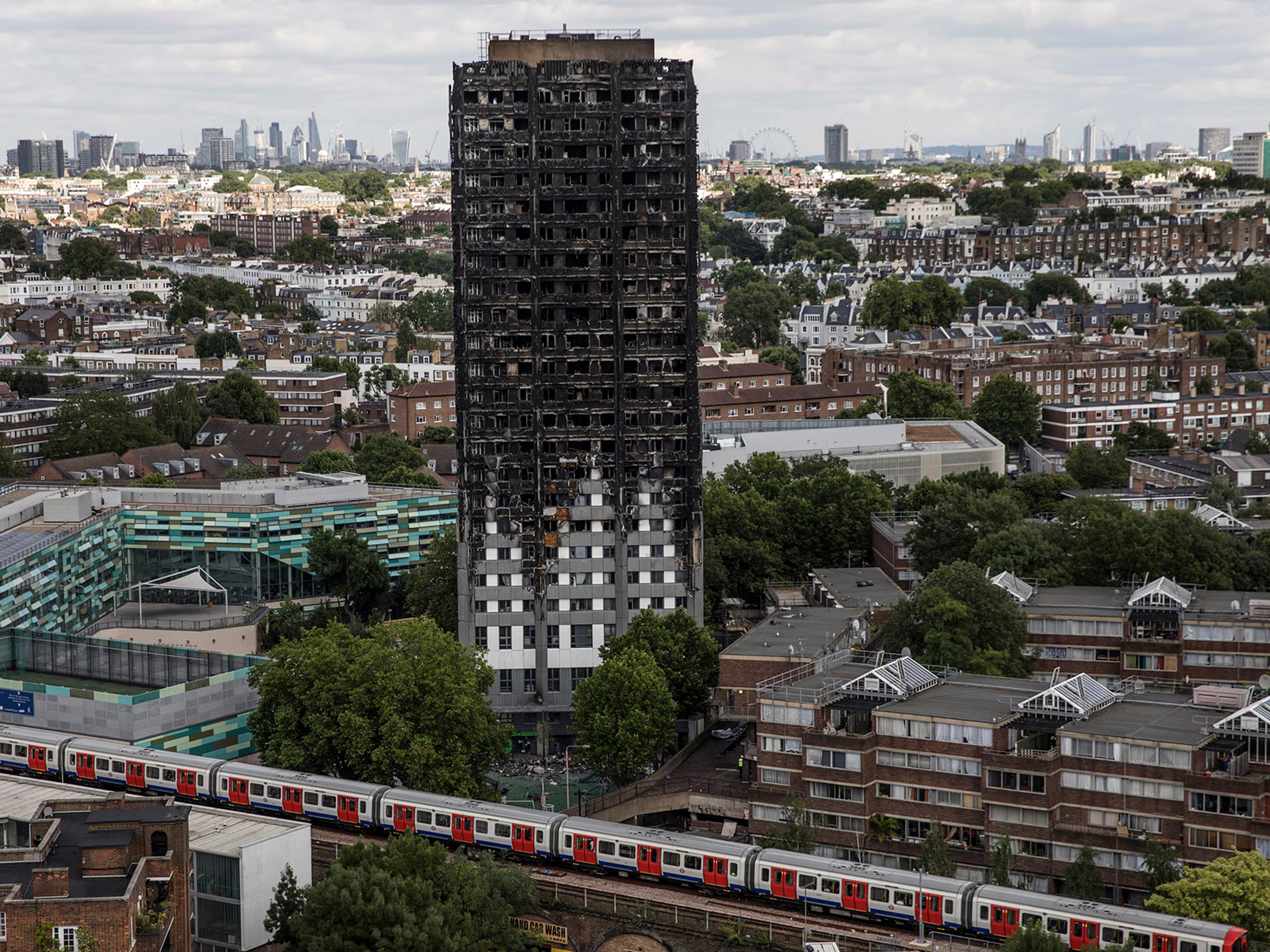
The 2017 Grenfell Tower fire fundamentally reshaped MEP (Mechanical, Electrical and Public Health) design across the UK. The tragedy exposed failures in fire stopping, compartmentation, façade detailing, smoke control and system integration. In response, the Building Safety Act 2022 and updates to Approved Document B introduced stricter compliance, clearer duty-holder responsibilities and a stronger “golden thread” of information. MEP designers must now prioritise coordinated fire strategy, non-combustible materials, robust sprinkler and alarm systems, and detailed documentation. Greater emphasis is placed on accountability, third-party certification, inspection regimes and multidisciplinary collaboration to ensure life safety remains central to every stage of building services design.
Market Dynamics: Growth, Consolidation and Opportunity
The last decade has seen notable market shifts. While the UK MEP sector has grown steadily, it hasn’t been without challenges. Supply chain disruptions, most acutely felt during pandemic related lockdowns, created delays and cost pressures that reverberated across projects. Similarly, economic uncertainty at various points forced contractors and consultants to innovate in how they manage materials, labour and project risk.
Despite these headwinds, recent industry reports suggest the sector is experiencing renewed optimism. Turnover for many mechanical and electrical contractors has increased, and there is a sense that the industry has “turned a corner” after several difficult years. This reflects resilience in demand, especially for retrofit and public sector work, alongside a broader rebound in construction activity.
The Rise of Smart, Connected Buildings
The growth of Internet of Things (IoT) and smart technologies has been another standout trend. Buildings today are more than static structures; they are connected ecosystems where sensors monitor temperature, humidity, occupancy and energy use in real time. These data streams feed into automated MEP controls that adapt to conditions, improve efficiency and support predictive maintenance. Remote monitoring and building control platforms have become valuable tools for facility managers and MEP teams alike.
What Has Changed – And What It Means
So, what does all this mean for MEP professionals, clients and the built environment in the UK?
In just ten years, the UK MEP industry has transformed from a largely technical trades discipline to a strategic partner in sustainable, resilient and intelligent building design. The pace of change shows no sign of slowing, but that evolution presents exciting opportunities for those ready to embrace innovation, collaboration and forward-thinking solutions.